
The Missing Link Between Marketing and Revenue
If your dashboard shows strong MQL numbers but revenue growth feels inconsistent, the issue is rarely traffic.
It is SQL quality.
Most B2B organizations lose 20 to 40 percent of revenue potential between:
MQL → SQL
SQL → Opportunity
And they rarely diagnose it properly.
SQL optimization is not tactical.
It is structural revenue engineering.
What an SQL Should Actually Mean
A true Sales Qualified Lead should validate:
• Budget identified
• Authority confirmed
• Clear business need
• Defined timeline
• Demonstrated buying intent
But in many companies, SQL simply means:
“Lead accepted by sales.”
That is routing. Not qualification.
If your SQL definition is weak, every downstream metric becomes unreliable.
Where Revenue Leakage Typically Happens
Below is a healthy vs weak funnel comparison:
| Stage | Healthy Conversion | Weak Funnel | Revenue Impact |
|---|---|---|---|
| MQL → SQL | 25–35% | 15–20% | Poor targeting or over-scoring |
| SQL → Opportunity | 30–40% | 18–25% | Qualification breakdown |
| Opportunity → Won | 20–30% | 15–18% | Sales execution gap |
A 5 percent lift in SQL-to-Opportunity conversion compounds dramatically across pipeline.
This is where optimization delivers disproportionate impact.
Step 1: Compare Converted vs Non-Converted SQLs
This is the most underused diagnostic in B2B marketing.
Build two datasets:
A) SQLs that converted into opportunities
B) SQLs that stalled or were disqualified
Then analyze side by side.
Example Pattern Analysis
| Factor | Converted SQLs | Non-Converted SQLs | Strategic Insight |
|---|---|---|---|
| Engagement Depth | 3+ high-intent page visits | Single content download | Depth predicts seriousness |
| Contact Seniority | C-level / VP | Manager / Individual contributor | Authority accelerates pipeline |
| Follow-up Time | Within 5–10 minutes | After 24 hours | Speed drives opportunity creation |
| Buying Signals | Demo + pricing page visits | Ebook or blog only | Intent beats engagement volume |
| Industry Fit | Core ICP | Peripheral segments | ICP discipline improves ROI |
When patterns repeat across 60 to 70 percent of converted SQLs, the targeting model must evolve.
Volume does not convert.
Intent converts.
Step 2: Refine the Lead Scoring Model
Most scoring models overweight content engagement.
Better scoring combines three layers:
Behavioral Signals
• Pricing page visits
• Demo requests
• Product comparison views
• Repeat visits within short timeframe
Firmographic Signals
• Revenue band match
• Employee size alignment
• Industry match
• Geographic relevance
Intent Signals
• Third-party intent spikes
• Multi-contact engagement within same account
• Buying committee behavior
Here is a simple scoring structure:
| Signal Type | Weight Example |
|---|---|
| Demo Request | +50 |
| Pricing Page Visit | +25 |
| ICP Industry Match | +20 |
| Manager-Level Contact | +10 |
| Ebook Download | +5 |
If ebook downloads drive SQL status, your scoring model is inflated.
Step 3: Speed to Lead Optimization
Speed is a revenue lever.
Connection probability decreases exponentially with delay.
| Follow-up Time | Connection Probability |
|---|---|
| Within 5 minutes | Highest |
| 30 minutes | 3 to 5 times lower |
| 24 hours | Dramatically reduced |
Pipeline velocity is not just a sales metric.
It is a marketing responsibility.
Automate alerts.
Trigger instant routing.
Track response SLA weekly.
Step 4: Strengthen Marketing-Sales Feedback Loops
Bi-weekly SQL review sessions are non-negotiable.
Core review metrics:
• SQL acceptance rate
• Disqualification reasons
• Conversion to opportunity
• Industry mismatch patterns
• Messaging misalignment
Example feedback structure:
| Question | Owner |
|---|---|
| Why were 32 percent of SQLs rejected? | Sales |
| Which campaigns generated highest converting SQLs? | Marketing |
| Are we targeting wrong seniority levels? | Joint |
| Is messaging aligned with buyer pain points? | Marketing |
Alignment reduces friction.
Friction reduces revenue.
Step 5: Measure Revenue per SQL
This metric separates high-performing teams from average ones.
Revenue per SQL = Closed Revenue ÷ Total SQLs
Example:
| Metric | Before Optimization | After Optimization |
|---|---|---|
| Total SQLs | 1,000 | 750 |
| Opportunities | 220 | 260 |
| Closed Revenue | $6M | $8.5M |
| Revenue per SQL | $6,000 | $11,333 |
Fewer SQLs.
Higher quality.
More revenue.
That is optimization.
Case Scenario: Structural Funnel Improvement
Marketing Spend: $1.5M
Initial Pipeline: $25M
MQL → SQL: 18 percent
SQL → Opportunity: 22 percent
After implementing:
• Scoring refinement
• ICP tightening
• Channel reallocation
• SDR SLA enforcement
Results:
Pipeline: $40M
MQL → SQL: 28 percent
SQL → Opportunity: 35 percent
Win Rate Improved
Deal Velocity Reduced
Same budget.
Better discipline.
Higher revenue efficiency.
Common Mistakes That Kill SQL Performance
• Inflated scoring thresholds
• Prioritizing volume over intent
• Delayed SDR follow-up
• No ICP discipline
• No closed-loop reporting
Optimization is not adding campaigns.
It is fixing structural leaks.
Executive Metrics to Track Weekly
- SQL Acceptance Rate
- SQL → Opportunity Conversion
- Opportunity Creation Time
- Revenue per SQL
- Cost per Opportunity
- Stage-wise Drop-off Percentage
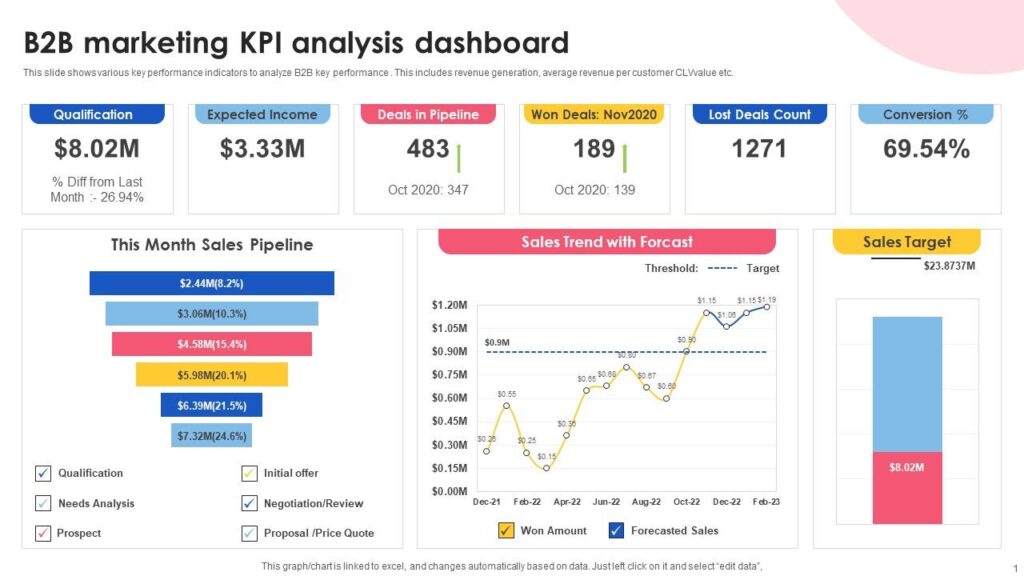
If these metrics are not visible in your dashboard, revenue leakage is invisible.
Final Thought
Marketing generates interest.
Sales closes revenue.
SQL quality connects the two.
If the bridge is weak, everything downstream collapses.
Fix qualification.
Align intent.
Enforce speed.
Track revenue per SQL.
Revenue is not scaled by volume.
It is scaled by precision.